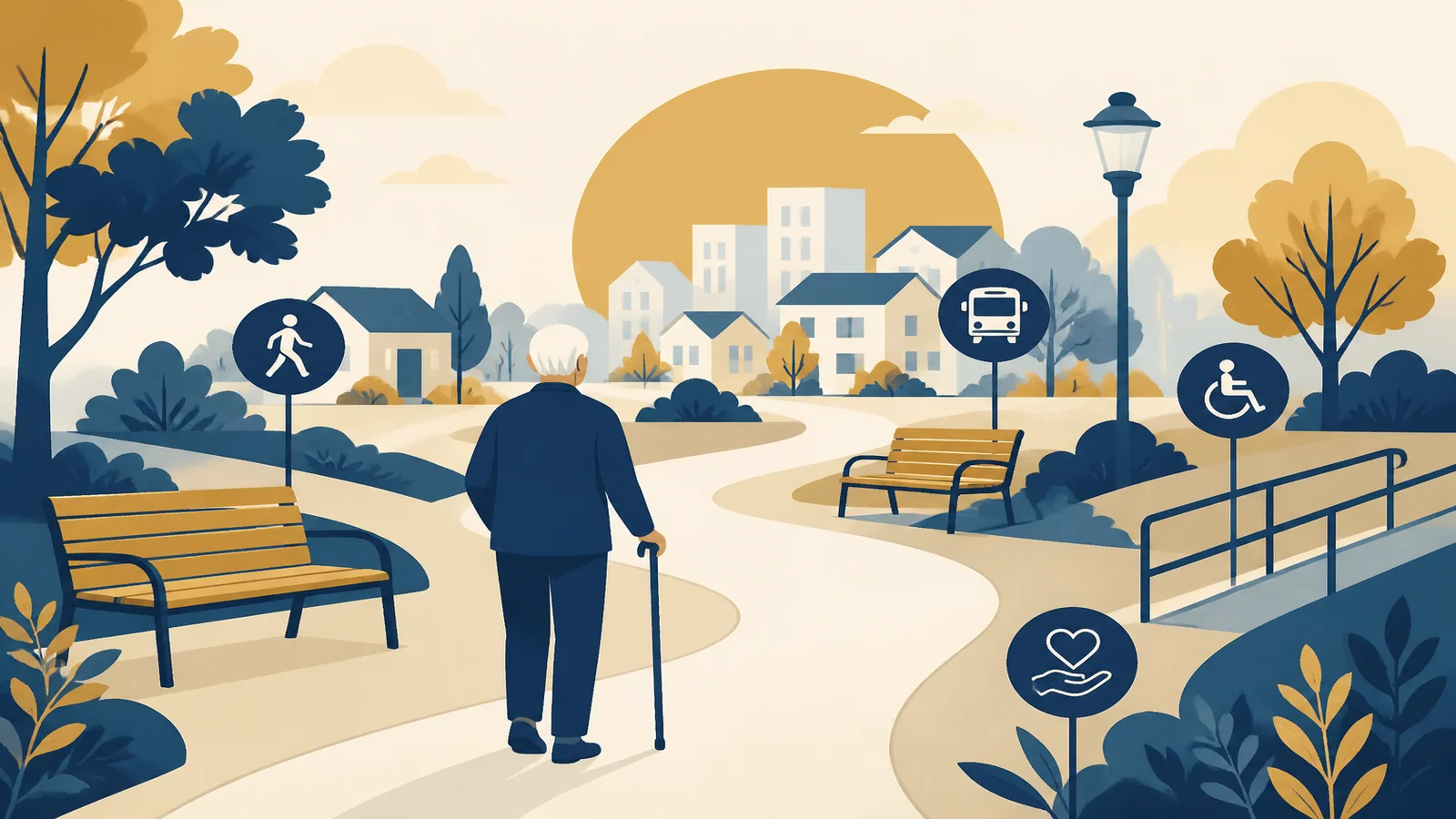

Honouring senior citizens is not limited to providing care; it includes protecting their independence, learning from their experience and keeping them involved in family and community life.
When we hear the word “care”, we may imagine that our role towards senior citizens is simply to provide what they need. A more respectful view goes further: how do we protect their independence? How do we enable their participation? How do we benefit from experience accumulated across decades?
The UAE National Policy for Senior Emiratis is built around an integrated care system and includes health, community participation, active life, financial stability, safety and future quality of life. These dimensions remind us that a person does not lose the need for meaning and participation as they grow older.
Experience is not a thing of the past
A senior citizen may carry professional, social and family memory that cannot be replaced easily. When we treat them only as a recipient of service, society loses part of the value they can offer.
Schools, community councils and cultural centres can host experience-sharing sessions, while families can record stories and memories. This does not mean turning every older person into a lecturer; it means offering the opportunity to participate when they wish.
Independence is a form of dignity
Good assistance does not take away a person’s ability to choose. When an older person can complete a task independently, it may be better to give them time instead of doing it quickly on their behalf.
In digital services, help means explaining and supporting, not simply taking the phone and completing everything without helping the person understand. Simple, repeated teaching protects independence and confidence.
Do not speak about them as though they are absent
One situation that requires awareness is when family members or service providers speak to a companion instead of addressing the older person, even though that person can understand and decide. The senior citizen should remain at the centre of the conversation, with the companion involved only when needed.
Language matters too. The UAE expression “senior citizens” carries recognition of experience and contribution; it is not merely a change of terminology.
Social isolation is a quiet challenge
A person may have every material need met and still lack dialogue and participation. A regular short visit, a call, involvement in a family decision or accompaniment to an activity can have considerable impact.
An age-friendly society designs opportunities for participation rather than limiting its attention to care services.
Technology should be a gateway, not a barrier
A growing amount of information and many services are now digital, so technology should not become a cause of isolation. Children and young people can offer digital support that respects privacy:
- Explain steps slowly.
- Write a short guide.
- Enable accessibility settings.
- Do not save passwords without permission.
- Let the person repeat the steps independently.
What can we do as individuals?
- Ask a senior citizen for their opinion, not only what they need.
- Record a story from their life with permission.
- Help them learn a digital tool instead of always completing the task for them.
- Include them in a social or cultural activity.
- Protect their privacy when discussing health or personal circumstances.
- Do not let speed become a reason to ignore their pace of speech or movement.
A society that benefits from every generation
Progress does not mean moving quickly and leaving behind anyone who cannot keep pace alone. A mature society knows how to create paths that allow every generation to participate in its own way.
Senior citizens are not a closed chapter; they are part of the present. When their experience remains at the heart of society, we do more than show respect—we give ourselves the opportunity to learn from a long memory of work, transformation and giving.
Official references
- National Policy for Senior Emiratis – The Official Portal of the UAE Government. https://u.ae/en/about-the-uae/strategies-initiatives-and-awards/policies/social-affairs/the-national-policy-for-senior-emiratis
- Senior Emiratis in the UAE – The Official Portal of the UAE Government. https://u.ae/en/information-and-services/social-affairs/senior-emiratis
- We the UAE 2031 Vision – Society Pillar – The Official Portal of the UAE Government. https://u.ae/en/information-and-services/social-affairs/society-and-we-the-uae-2031-vision
Reference links were checked during package preparation on 25 August 2026. If a policy or link changes, the official source remains the most up-to-date reference.