The best innovations do not begin by asking what technology we possess, but what human problem deserves to be understood and solved better.
When we hear the word “innovation”, thought quickly turns to applications, artificial intelligence and new devices. Technology, however, is not the definition of innovation; it is one of its tools. The most innovative idea may be a small change in communication, a reordered step, the removal of an unnecessary procedure or an experience that makes someone’s life easier.
“We the UAE 2031” places people and their capabilities at the heart of development, while future foresight and innovation are connected to continuous improvement of systems and services. This gives us an important rule: good innovation does not chase novelty simply because it is new; it searches for genuine value.
Begin with the problem, not the solution
A recurring mistake is becoming impressed by a tool and then searching for a problem on which to use it. It is better to begin by observing need:
- Where do people become stuck?
- Which step repeats without adding value?
- What information is difficult to understand?
- Which group cannot reach the experience easily?
- What small problem repeats until it becomes large?
Only then do we ask: what is the most suitable solution? It may be technical, and it may not be.
Listening is a source of innovation
People use services and products differently from the way designers imagine. Listening to users is therefore not a courtesy; it is a source of data.
Listening does not mean collecting opinions alone. We need to observe patterns. One complaint about an unclear button may be an individual issue. Repetition reveals a design opportunity. If senior citizens alone face the barrier, it reveals an opportunity for inclusion.
Small innovation can spread
Not every innovation needs a large budget. A unified template, a checklist, a better sorting method, a clearer message or a simpler page can save time and reduce errors.
Value appears when a practice can be repeated, explained and measured. An idea that exists only in its creator’s mind is difficult to scale.
Experiment before seeking perfection
Innovation does not have to begin complete. A simple prototype can be built, tested with a limited group, reviewed and improved.
This reduces risk and makes the user a partner. More importantly, it prevents us from spending a long time developing something no one needs.
Questions that protect innovation from display
Before adopting an idea, ask:
- What is the specific problem?
- Who benefits?
- What evidence shows the need exists?
- What is the current alternative?
- Why is the new solution better?
- What are the risks?
- How will we know it succeeded?
- Can it continue after the initial enthusiasm?
When these questions cannot be answered, the problem needs to be understood more deeply.
Technology when it is appropriate
Artificial intelligence can support classification, analysis, summarisation and personalisation, but using it requires data quality, privacy and governance. A simple application that needs no AI may be better than a complex solution people cannot use.
Human-centred innovation chooses technology based on value, not fashion.
A culture that permits questions
Innovation cannot grow in an environment where every question is punished. People need space to ask: why do we do this in this way? Could a step be removed? What if we tried something else?
A good question is also responsible. It does not stop at criticism; it suggests an experiment that can be tested.
Begin around you
Choose one everyday experience and look at it again. You do not need to invent something new for the world. Real innovation may be seeing a need that everyone has grown accustomed to and refusing to treat it as inevitable.
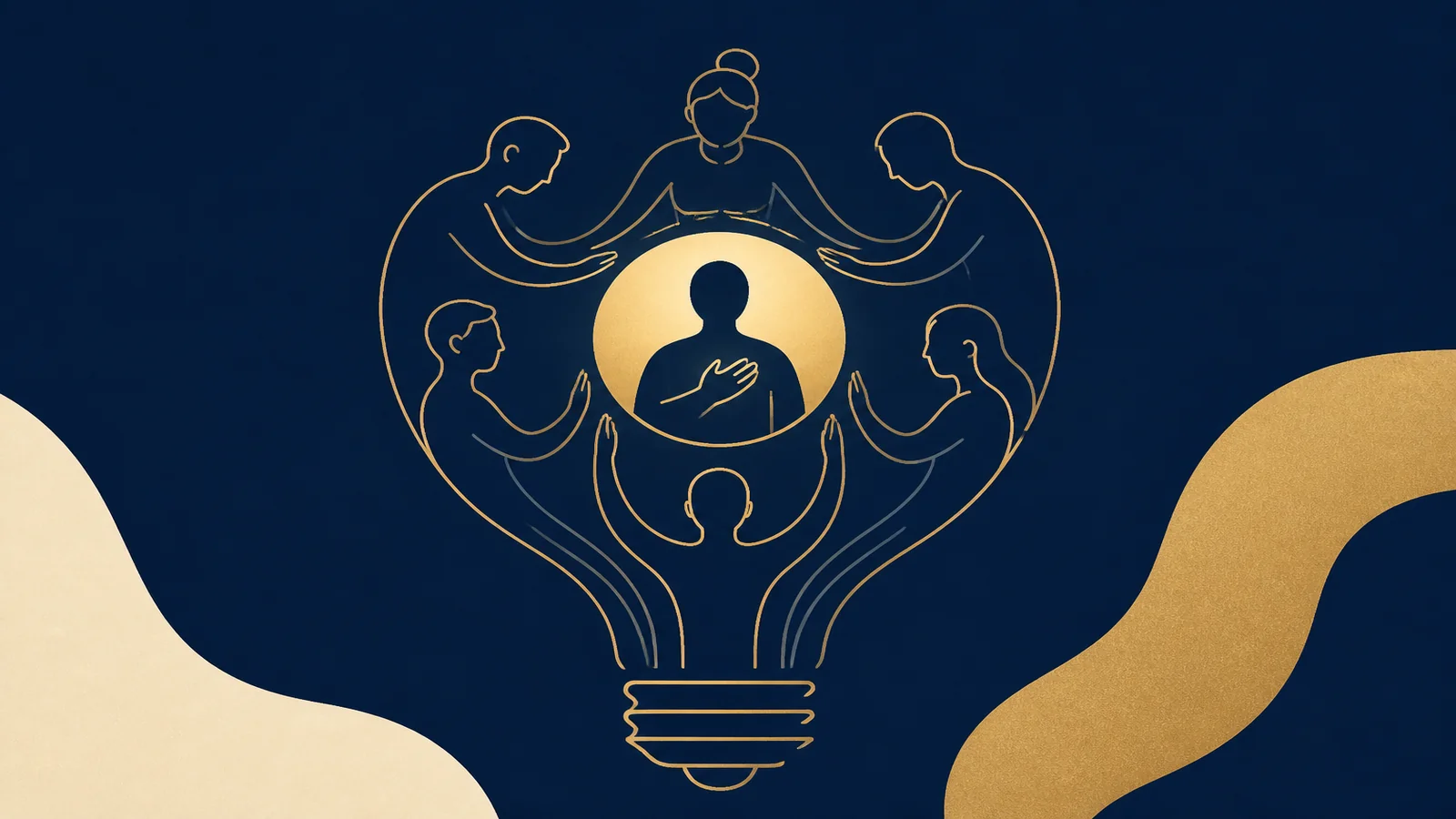
People do not always need more technology; they need solutions that understand them better. That is where innovation worth keeping begins.
Official references
- We the UAE 2031 Vision – Society Pillar – The Official Portal of the UAE Government. https://u.ae/en/information-and-services/social-affairs/society-and-we-the-uae-2031-vision
- UAE Future Map – The Official Portal of the UAE Government. https://u.ae/en/about-the-uae/uae-in-the-future/uae-future
- UAE Digital Government Strategy – The Official Portal of the UAE Government. https://u.ae/en/about-the-uae/strategies-initiatives-and-awards/strategies-plans-and-visions/government-services-and-digital-transformation/uae-national-digital-government-strategy
Reference links were checked during package preparation on 25 August 2026. If a policy or link changes, the official source remains the most up-to-date reference.