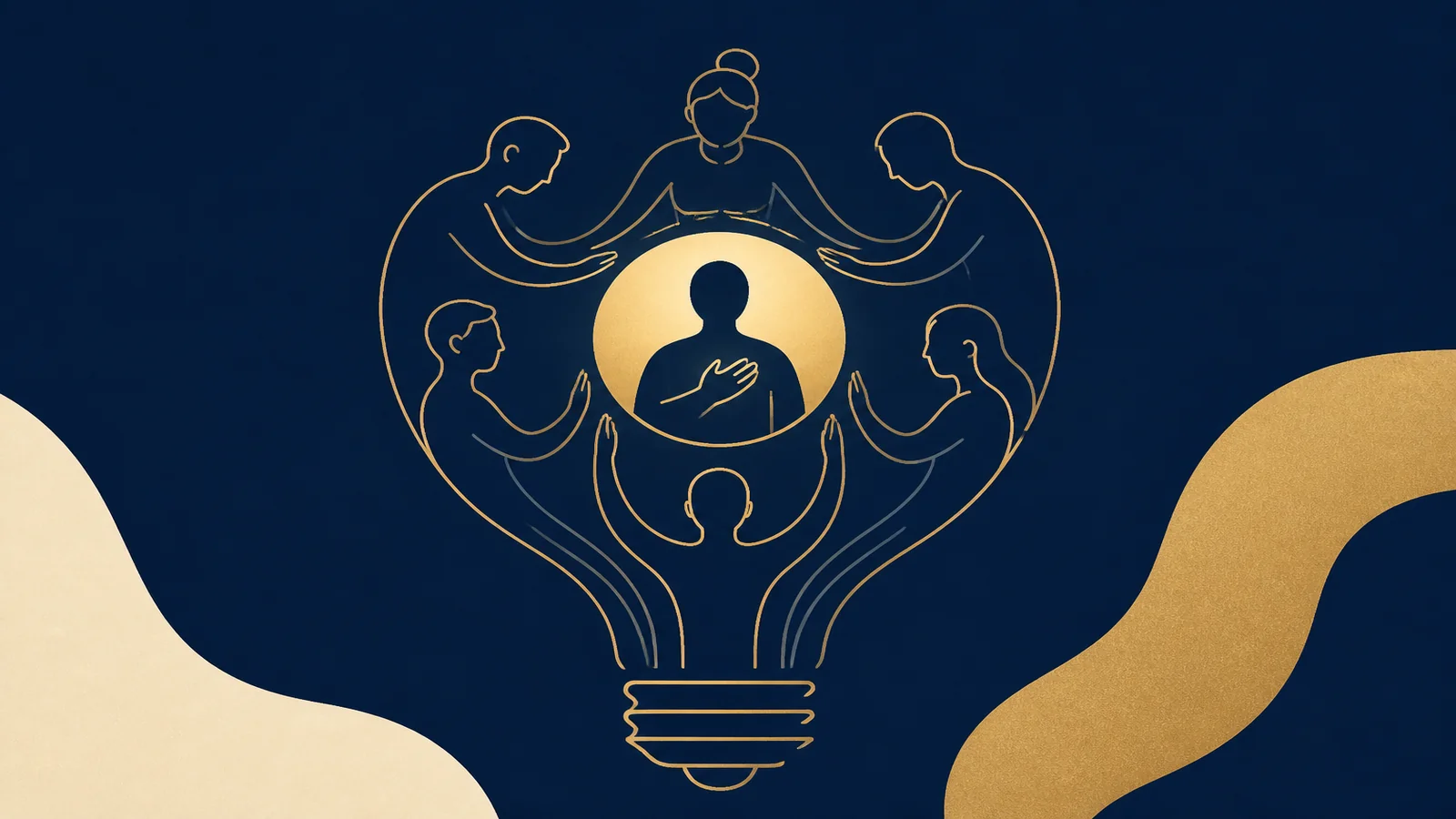
Artificial intelligence expands what we can do, but it does not remove our responsibility. Real value appears when efficiency is combined with privacy, fairness, clarity and human judgement.
Artificial intelligence is no longer a distant future subject. We use it in research, writing, analysis, translation and design, and its applications are growing across many sectors. The UAE has set a clear goal of leadership in artificial intelligence by 2031, with attention to capability, infrastructure, governance and high-impact uses.
Enthusiasm for technology, however, needs a parallel question: how do we keep people at the heart of the system?
AI is a tool, not a moral decision-maker
A system can suggest, classify or predict, but it has no conscience or legal responsibility in the human sense. Sensitive decisions therefore require clarity. Who is responsible? Can the person challenge the outcome? Is there human review?
The greater a decision’s impact on a person, the more important governance becomes.
Data does not exist without an owner
Artificial intelligence depends on data, but that data may contain people’s lives: locations, photographs, voices, medical history or financial information. Collecting or sharing it without a genuine need increases risk.
A practical rule is to collect the minimum necessary, use it for a clear purpose and protect it appropriately.
Accuracy is not guaranteed
Generative AI tools can produce answers that sound confident while being wrong. Important information must therefore be checked, particularly in law, health, policy and references.
On this platform, for example, when an article is connected to a national direction, the official reference remains the source—not an answer generated by an AI tool.
Bias can be automated
When historical data contains bias, a system may learn the same pattern. Results should therefore be tested across different groups, and overall accuracy should never be assumed to mean fairness for everyone.
Keeping people at the centre means asking: who could be harmed most if the system is wrong?
Transparency
A user does not need to know every detail of an algorithm, but in an important context they deserve to know when they are dealing with an automated system, what the system’s limits are and how to reach a person when necessary.
Hiding automation in sensitive situations can weaken trust.
AI and knowledge
One of AI’s most useful roles is helping people reach and simplify knowledge. It should not, however, replace reading and thinking. When it writes everything for us without review, it also removes an opportunity to learn.
It can be used as a partner for:
- Generating questions.
- Organising ideas.
- Comparing drafts.
- Suggesting research angles.
- Simplifying a text before human review.
- Supporting access for people with different needs.
A skill for the future: the good question
As tools become widespread, a person’s value becomes less connected to producing text quickly and more connected to defining a problem, asking a good question, checking the answer, understanding context and making a responsible decision.
Neither fear nor fascination
Complete fear causes us to lose opportunities, while complete fascination causes us to ignore risks. A balanced position is one of learning and responsible experimentation.
The UAE Strategy for Artificial Intelligence 2031 promotes capability-building and leadership. For an individual, this can become a habit: learn the foundations of the technology, understand its limits, protect your data and never surrender your judgement completely.
A human future is not a future without artificial intelligence. It is a future in which we use AI to strengthen human capability rather than reduce human value, rights or voice.
Official references
- UAE Strategy for Artificial Intelligence 2031 – UAE Government Office for Artificial Intelligence. https://ai.gov.ae/wp-content/uploads/2023/05/AI-Report-EN-v4.pdf
- Artificial Intelligence in Government Policies – The Official Portal of the UAE Government. https://u.ae/en/about-the-uae/digital-uae/digital-technology/artificial-intelligence/artificial-intelligence-in-government-policies
- UAE Future Map – The Official Portal of the UAE Government. https://u.ae/en/about-the-uae/uae-in-the-future/uae-future
Reference links were checked during package preparation on 25 August 2026. If a policy or link changes, the official source remains the most up-to-date reference.